
Fish care (8/10)
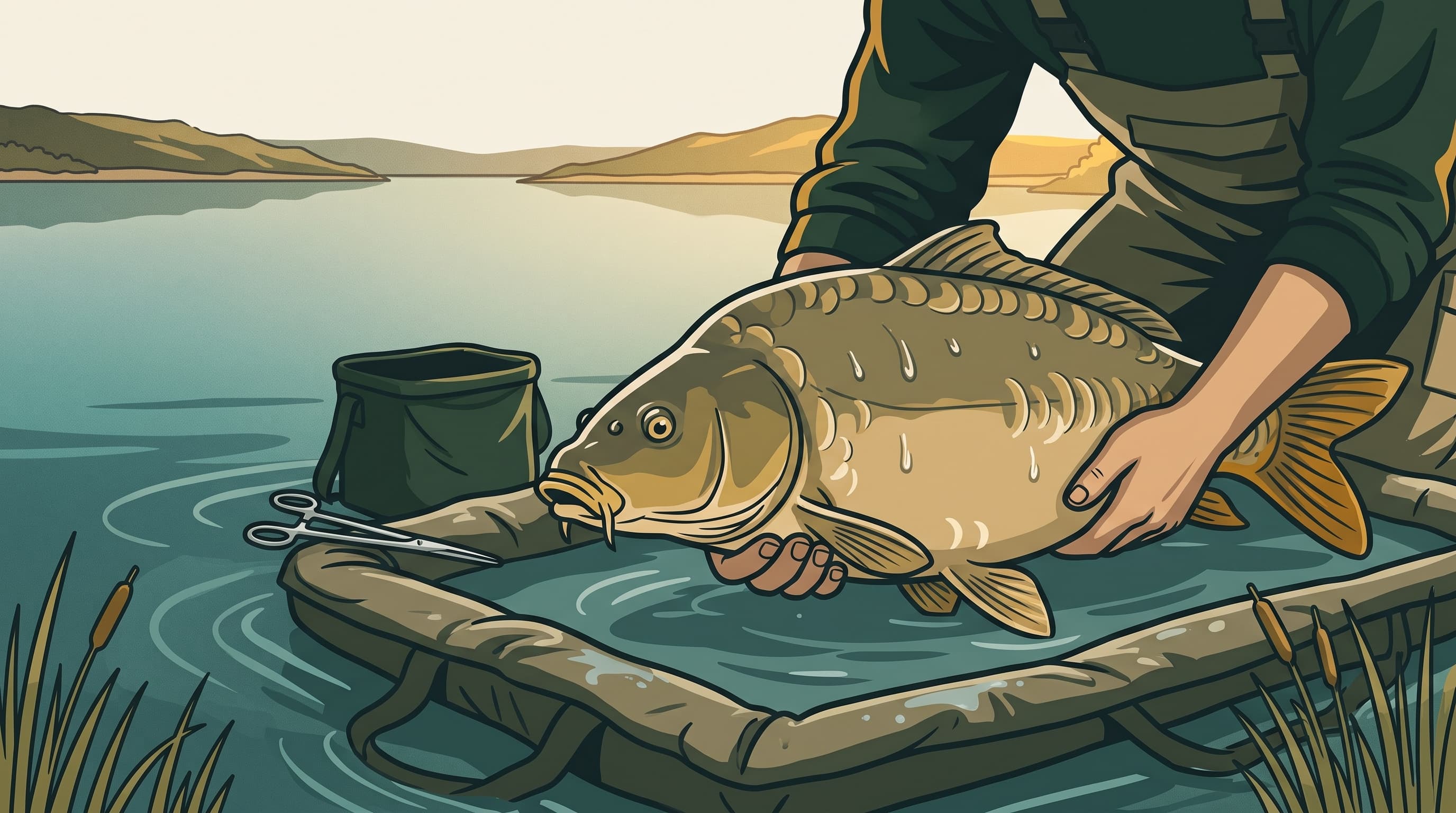
Eighth instalment of the CapseMaster series: the full step-by-step carp handling protocol, the most common summer mistake, what to do when regulations require culling your catch, and biosecurity between waters.
Eighth part of the CapseMaster series: the step-by-step handling and fish-care protocol, and what to do when regulations require you to cull your catch.
Fish care
There's no strategy or personal preference here. There's a procedure, and there's a prior legal obligation that determines what you can and can't do with the fish.
Step zero: what the law says about this particular fish. Before deciding how to handle a carp, you need to know what you're required to do with it in that water. The three possible scenarios — release banned, release authorised as an exception, release mandatory — are covered in detail in the next article in the series, on regulations. If release is banned, no recovery technique applies; if release is mandatory, this whole chapter does. With barbel, boga and other native cyprinids the regime is usually the opposite of carp's: in many regions catch-and-release and immediate return "with no further handling" are mandatory.
Preparation (before you have the fish)
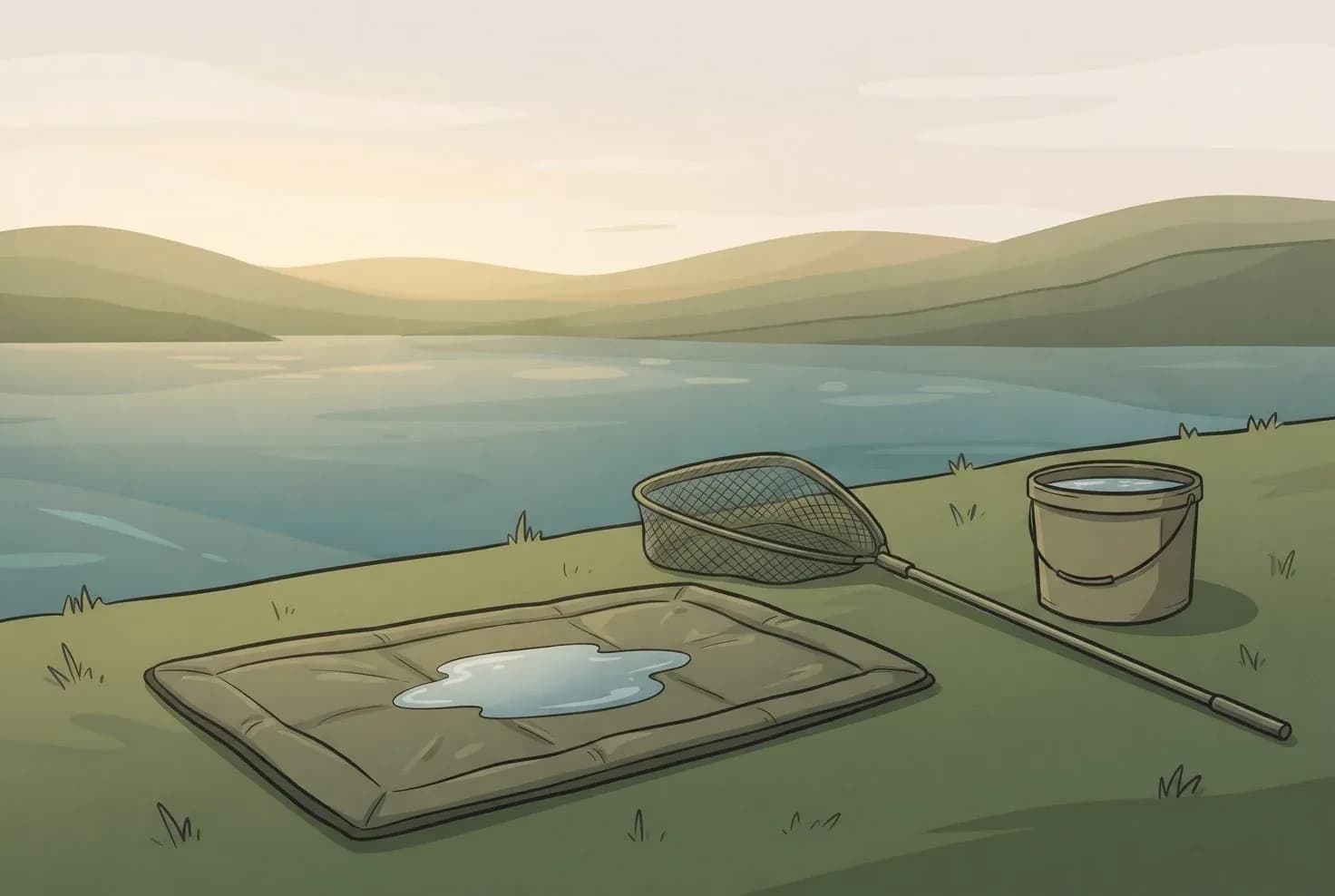
- The mat unrolled and wet before the first cast, not when the alarm sounds.
- A bucket of water, full and to hand.
- The landing net assembled, mesh loose and knot-free.
- The unhooking tool or forceps in a fixed spot, always the same one.
- Antiseptic, scales and a weigh sling ready if you're going to weigh.
- The camera ready and set up. Time out of the water shouldn't be spent hunting for the shooting mode.
Handling protocol, step by step
- Net it in the water. A sunk, still landing net; the fish comes to it. Don't lift it by the arms with the fish inside.
- Let it rest a few seconds. With the fish still in the mesh and in the water, while you get the mat ready.
- Wet everything. The mat, your hands and the fish itself. Its slime is its barrier against infection; a dry hand strips it off.
- Move it onto the mat. Kneeling, close to the ground. Never standing or walking with the fish in your arms.
- Unhook it. With forceps, without pulling. If removing the hook would do more harm than leaving it, cut the line as close to the hook as possible. Avoid any pressure on gills or belly.
- Treat wounds if needed. A specific antiseptic on the hook wound or any scrapes, applied with the fish out of the water, then return it.
- Weigh (optional). In a wet sling, taring it first. If weighing will extend time out of the water beyond what's reasonable, skip it.
- Photograph. Kneeling, over the mat, with the fish low. One hand under the pectoral fin, one under the anal fin. Maximum 30–45 seconds.
- Return it, or proceed per regulations. If release applies: hold it in the water, facing the current if there is one, until it swims off on its own. Don't push it.
Common summer mistake: applying the same protocol in 12 °C water as in 27 °C water. In warm water, dissolved oxygen is lower and the fish recovers far worse from a long fight. Above 24 °C, shorten the fight as much as your gear allows, minimise time out of the water, skip weighing, skip the retention sling, and spend more time than usual on recovery before release.
When regulations require culling
In several regions, a carp caught outside the zones where release is authorised must be culled. It's an unpleasant obligation for many carpers, but it's part of the legal framework for managing invasive species, and not complying is an offence. Aragón's regulations describe the required method: complete severing of the join between the brainstem and the spinal cord with a sharp cutting instrument or, if size allows, cervical dislocation. Doing it quickly and correctly is part of respecting the animal.
What to do if this conflicts with your views: it's a legitimate position, shared by a good part of the community. The way through it is to fish where catch-and-release is authorised — specific stretches and reserves in Extremadura, cyprinid waters in Huesca and Zaragoza, delimited waters in Castilla y León or La Rioja, managed private fisheries — and to channel disagreement through federations and the regional fishing councils, the bodies where these orders are debated each season.
Biosecurity: your obligation to the next water
Clean, dry and disinfect everything that's touched the water before using it in another: landing net, mat, boots, waders, keepnets, retrieval crates, bait boats. This is expressly required in several regions, and it's the only practical barrier against the spread of zebra mussel, Asian clam and rock snot (Didymosphenia geminata). For the latter, Castilla-La Mancha's rules for the Sorbe river detail the procedure: spray with 2% commercial bleach, or 5% salt or another antiseptic, at the end of the day.
This is the eighth part of a series based on the CapseMaster manual, 2026 edition. Fishing regulations change every season: this content does not replace the closed-season order currently in force in your region.
The whole CapseMaster series
- 1. What carpfishing is and carp biology, applied
- 2. Finding and reading carp
- 3. Gear and the rig catalogue
- 4. Baits and baiting
- 5. Nine complete strategies and fishing by season
- 6. Condition matrix, Spanish scenarios and session protocols
- 7. Big specimens, 50 mistakes and diagnosing at the swim
- 8. Fish care
- 9. Spanish carpfishing regulations
- 10. What to bring, 10-minute field guide, glossary and sources