
Condition matrix, Spanish scenarios and session protocols (6/10)
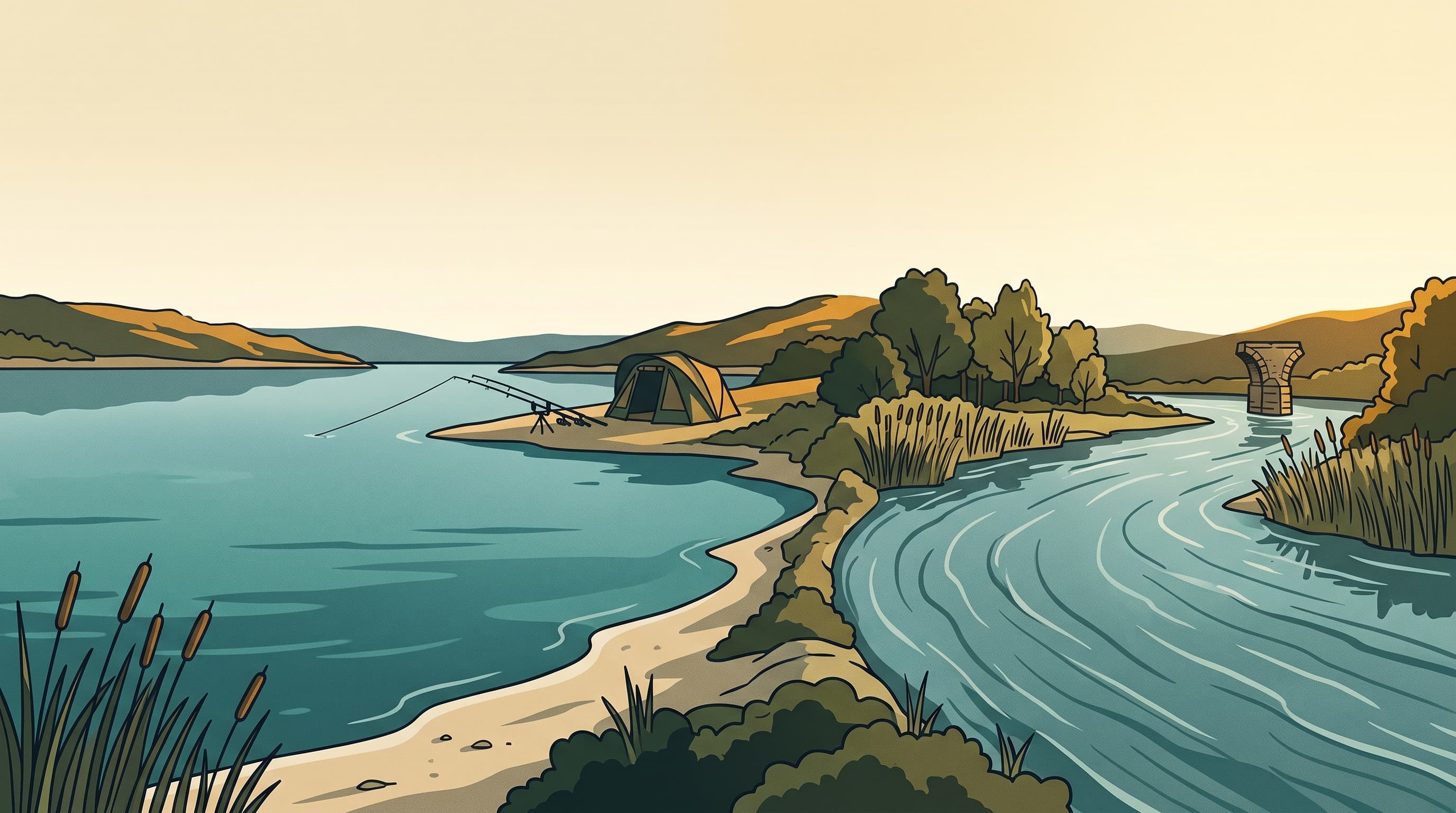
Sixth instalment of the CapseMaster series: a quick-reference matrix for ten different conditions, the particularities of Spanish reservoirs and rivers, and three session protocols — short, 24 h and 48-72 h — step by step.
Sixth part of the CapseMaster series: a matrix to check before you get to the water, the particularities of Spanish reservoirs and rivers, and three ready-to-follow session protocols.
Fishing matrix by condition
Ten concrete situations and what to do in each. This is the table to check in the car, before heading down to the water.
- Cold water, under 10 °C. Look for concentrated groups and isolated liners. Fish the old channel, deep basins, banks with afternoon sun. Bait: very soluble 12 mm pop-up. Rig: Ronnie or chod. Minimal baiting: PVA only.
- Warm water, over 24 °C. Look for rollers, high fish, activity at dawn. Fish windy banks, inflows, mid-water. Bait: fishmeal, pellets, particles. Rig: hair rig and a zig run in parallel. High, sustained baiting.
- Strong wind. Look for foam and accumulated scum. Fish the bank the warm wind blows into; sheltered if it's cold wind. A heavy bait that won't roll. Rig: bigger lead, short hook length. Concentrated baiting — dispersion is uncontrollable.
- Total calm. Look for very visible jumps, rollers and bubbling. Fish wherever you see a sign; observation works. A quiet bait entering the water. Rig: anything, cast gently. Reduced, very precise baiting.
- Clear water. Look for visible fish, at maximum wariness. Fish deep areas by day, margins at dawn and at night. A small bait, discreet colour. Rig: long hook length, D-rig or combi. Spread baiting, away from the rig.
- Murky water. Poor visibility, smell does the work. Fish tails and inflows after rain. High olfactory attraction. Rig: standard hair rig. Concentrated baiting, with a cloud (groundbait/pellet).
- Heavy weed. Fish clear patches and canopy edges, not the interior. 15 mm pop-up. Rig: helicopter + lead clip. Reduced baiting, over the clear patches.
- Muddy bottom. Distinguish clean, odourless silt (good) from dark, gassy silt (bad). Fish over the clean silt and its transitions. Pop-up or snowman. Rig: chod or helicopter. A big bait that won't bury itself.
- Hard bottom. Detected by fine vibration on the lead. Fish plateaus, steps, the channel. Sunk boilie or wafter. Rig: hair rig + blowback, inline lead. Concentrated, precise baiting.
- High fishing pressure. Look for trampled swims and bait scraps — to avoid them. Fish awkward, less accessible spots. A profile different from the dominant one. Rig: long hook length, an uncommon presentation. Spread or no baiting.
Spanish scenarios: reservoir and river
Spain is, in reservoir surface area, one of the countries with the most carpfishing potential in Europe. The problem isn't a lack of fish — it's that the rules change from one bank to the other.
The Spanish reservoir: five particularities
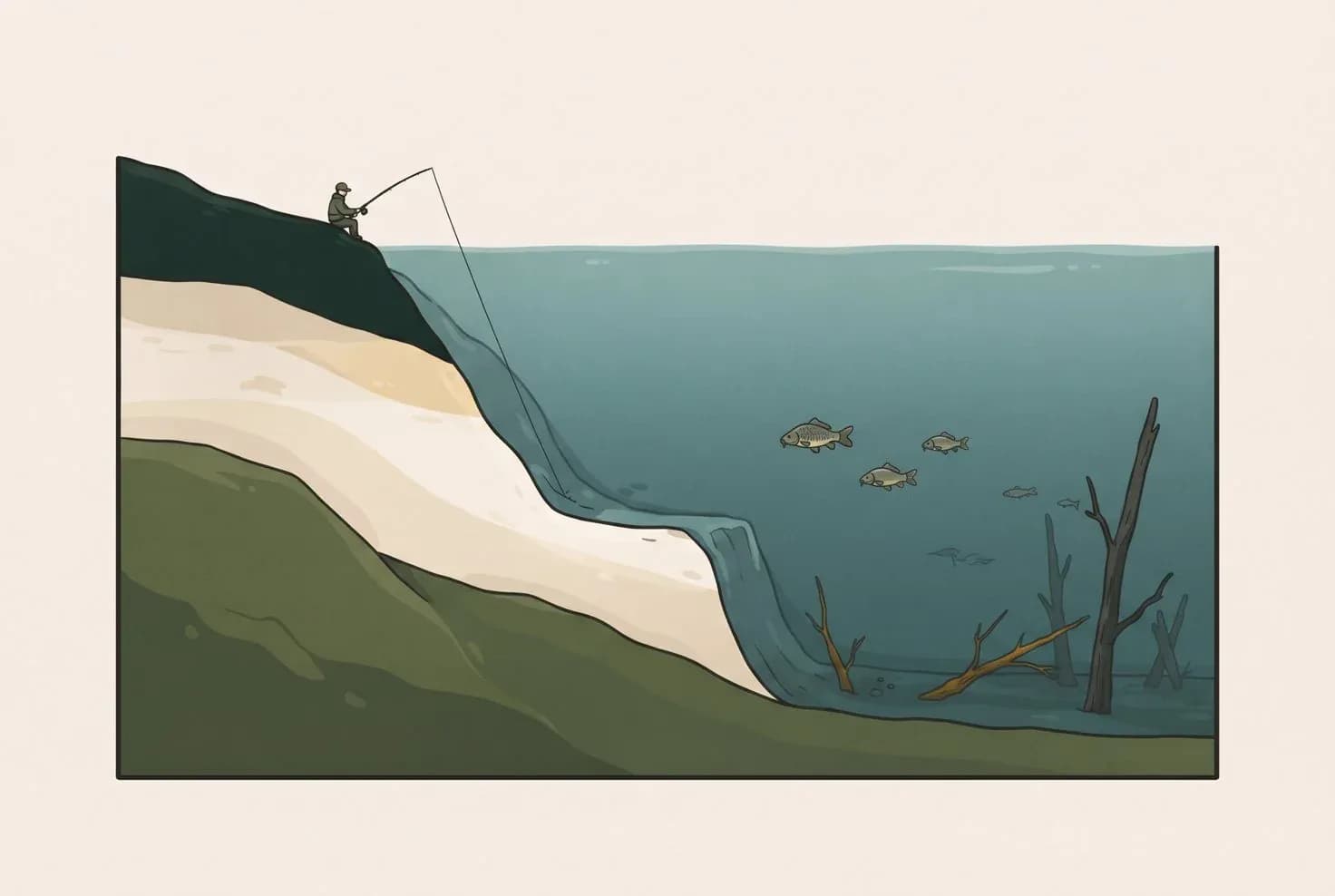
- Level swings. A regulated reservoir can vary by 15 m between April and September. Spring swims end up dry in August, and August zones sit 12 m underwater in April. Photographing the empty basin is like having a nautical chart.
- Highly variable clarity. Many headwater reservoirs are extremely clear; lowland ones are murky and productive. Clarity determines bait colour, casting distance and how important the night is.
- Dense populations of accompanying cyprinids. Barbel and boga share the bait. This forces you to select for size and hardness.
- Problematic invasive species. Bleak destroy soft baits; red swamp crayfish take particles; wels catfish can turn up in the Ebro and Tagus and break a carp leader.
- Access and navigation restrictions. Many reservoirs sit inside protected areas (Special Protection Areas for Birds, Natura Network, Biosphere Reserves) with navigation limits, closures for bird nesting, and camping bans.
Reference zones (with a warning)
The most cited scenarios among the Spanish carpfishing community are Mar de Aragón (Mequinenza–Caspe, on the Ebro), the Ebro stretch through Zaragoza, the Riba-roja and Flix reservoirs in Catalonia and, in Extremadura, the Orellana, Cíjara, García de Sola (Puerto Peña) and Alcántara reservoirs. Extremadura is also the region with the most favourable framework, having stretches with free fishing hours.
Important warning: a reservoir being famous for its carp doesn't mean carpfishing as practised in the rest of Europe is legal there. At the Mar de Aragón sports fishery, for example, the published legal hours run from one hour before sunrise to one hour after sunset: there's no general night fishing. Fame and legality are two different things. Always check.
The river: what changes
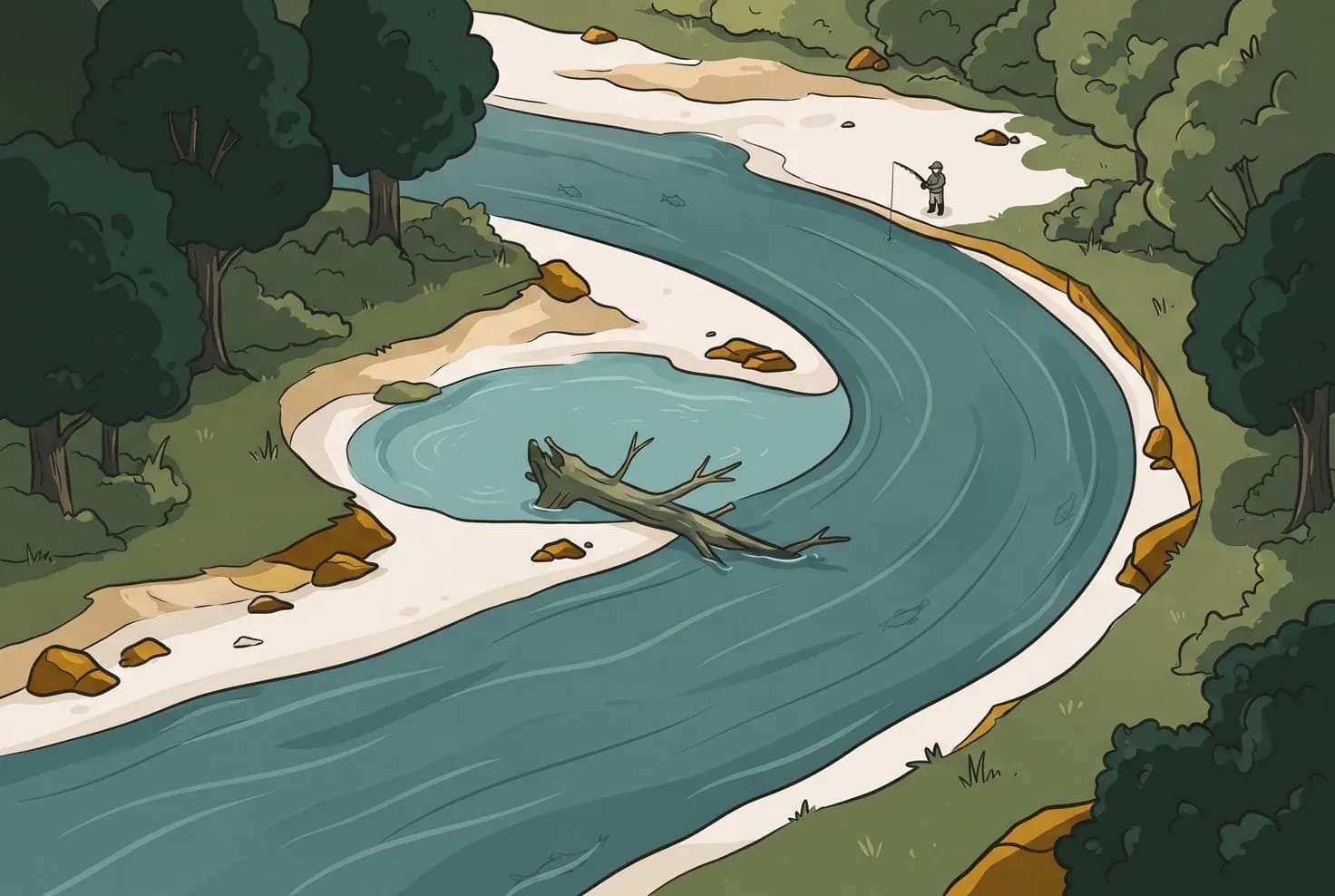
- The lead gets heavier: 110–170 g is common on the Ebro to hold the rig against the current.
- Baiting moves: whatever you put in will drift downstream. Bait slightly upstream of your spot, or use heavy baits that won't roll.
- The fish doesn't patrol, it positions itself: it looks for spots where food arrives on its own. Your job is identifying those spots, not drawing fish in.
- The fight is different: the current adds to the fish's strength. A more generous drag and steady pressure, not jerks.
- Zebra mussel: in the Ebro basin and others, disinfecting your gear is mandatory. It's not an eco-friendly suggestion — it's enforceable regulation.
Session protocols
A protocol stops important decisions being made while tired, rushed or frustrated. These three are meant to be followed in order.
Short-session protocol (4–6 hours)
- Before leaving: check regulations, weather and reservoir level. Prepare rigs at home: on a short session, every minute spent tying hook lengths is a minute not fishing.
- Arrival (0–10 min): don't set up. Observe from the highest available point.
- Choosing the swim (10–20 min): decide based on what you've seen and what you know of the bottom. If you've seen nothing, choose the most obvious bottom feature.
- Minimal plumbing (20–30 min): three casts with the lead. That's enough to know whether the bottom is hard or soft, and where it changes.
- Rigging and casting (30–45 min): two rods to the chosen spot, one at 20–30 m as a control.
- Baiting: PVA on every cast and a handful, nothing more.
- Management (the rest): don't touch the rods unless there's a sign. If nothing halfway through, move the rods 50 m — don't change the rig.
- Packing up: leave the swim clean and note what you did and what happened.
24-hour protocol
- Arrival (T+0): park far off and walk in if possible. Observe for 30 minutes before unloading.
- Reading (T+0:30): fan-plumb the swim. Identify hard bottom, a step and transitions. Note distances.
- Choosing spots (T+1:00): three different points by depth and bottom type. Never all three rods together at the start.
- Marking (T+1:15): fix the distance with a bobbin clip and a visual reference on the far bank (a marker buoy only if legal).
- Initial baiting (T+1:30): per the scoring system from the baiting article. Bait before casting the rigs, not after.
- Rigs (T+2:00): final casts. Check the hook point and that the lead releases.
- Afternoon monitoring: note liners with time and rod. It's the data that will order the night.
- Top-up (2 h before dusk): top up lightly, with time for the water to settle before the peak.
- Night (if legal): red light, minimal movement. Don't recast without reason: every cast rests the zone for 20 minutes.
- Dawn (-1 h to +2 h): the most important window. Fresh rods before dawn, not during it.
- Strategic change (T+20 h): if dawn has passed with nothing, move — don't persist.
48–72-hour protocol
Adds to the above:
- Pre-bait the day before, where legal, at the same time you expect to fish.
- Rod rotation: one rod always fixed over the baited spot; the others rotate. Never move everything at once.
- Baiting management: little and often. Split the total planned amount into six or eight top-ups.
- Rest management: plan sleep during the water's historically dead periods, not when you crash from tiredness. An exhausted angler handles a 15 kg fish badly.
- Activity log: a notebook with time, temperature, wind, rod, type of sign. Over 72 h you see the pattern that's noise over 24 h.
- Re-evaluate every 12 h: a single question — "if I arrived right now for the first time, would I set up here?" If the answer is no, move.
Legal note (overnight stays and shelters): being allowed to fish at night doesn't mean you can camp. In Extremadura, shelters admitted in free-schedule stretches must be earthy brown or khaki, under 4 m across, with a mosquito-net entrance letting you see the whole interior from outside; a conventional tent counts as free camping and is subject to tourism, water and conservation regulations. Also, in those stretches you can't occupy a swim with litter within a five-metre radius.
This is the sixth part of a series based on the CapseMaster manual, 2026 edition. Fishing regulations change every season: this content does not replace the closed-season order currently in force in your region.
The whole CapseMaster series
- 1. What carpfishing is and carp biology, applied
- 2. Finding and reading carp
- 3. Gear and the rig catalogue
- 4. Baits and baiting
- 5. Nine complete strategies and fishing by season
- 6. Condition matrix, Spanish scenarios and session protocols
- 7. Big specimens, 50 mistakes and diagnosing at the swim
- 8. Fish care
- 9. Spanish carpfishing regulations
- 10. What to bring, 10-minute field guide, glossary and sources